what we do best

Icon Global Link prov

ides supply chain risk assessments and integrated risk management software both of which reduce the costs and streamline the process of implementing an integrated risk management approach in your business or across your entire supply chain.

supply chain assessments

Our supply chain assurance methodology combined with ISES® software makes us more efficient and cost effective than other consultancies at identifying, documenting & electronically managing risk throughout your supply chain. Please choose from:

Water

Food

Manufacturing

To access detailed information in this website or to obtain an obligation free trail and costing please contact us.

haccp conference stand


ISES® Software for supply chain integrated risk management

The new .net interface makes the ISES® software the most advanced integrated risk management tool on the market. Features include customisable folders, flowchart, rich text editing, risk matrix, customisable decision trees, and a built in PDF writer. Read More

International Food Chain Integrity & Traceability Inception Phase Report Launch

Tim Pallas MP, Victorian Minister for Roads and Ports launched the International Food Chain Integrity and Traceability Project (IFCITP) on Tuesday 25 November at an industry function hosted by the Victorian Government in conjunction with the Victorian Freight and Logistics Council. Read more

Australian food products are set to be given a competitive edge in heated international markets with the trial of an innovative supply chain system. Read more

Download the report from the Victorian Freight and Logistics website

KPMG and IGL team up on Chain of Responsibility (CoR)

kpmg banner

KPMG have teamed up with IGL to utilise the ISES software to efficiently and effectively assess and document management systems for Supply Chain Risk Assessments. The recent area of focus of the KPMG/IGL team is CoR. Many Australian businesses are only just realising that they may be breaking the law and exposing themselves to massive fines and even closure. Organisations are now engaging our team to assess their supply chain against Worlds Best Practice and implement the framework to properly manage their risks. Read More


Join our email list 

Click here to join our email news update list


Click here to:


Integrated Risk Management Software:

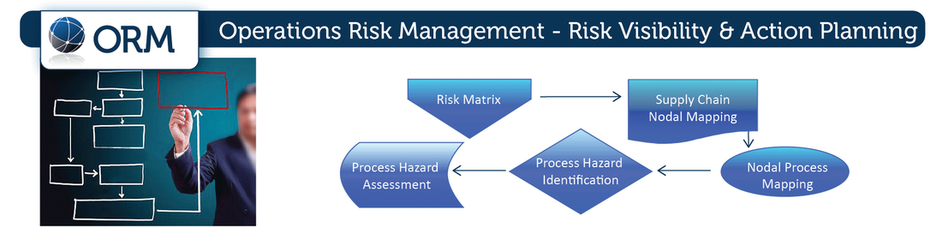
ISES® is an invaluable tool that will instantly save your business or supply chain time and money. This software solution combines the very latest .net flowchart and SQL datbase technology with internationally recognised risk assessment and risk management approaches.

ISES® can be used for: ISO,HACCP , ASNZ4360, Health and Safety, Environmental Management, Supply Chain Risk Assessments, ISO22000, Bio Security, Chain of Responsibility, Carbon Accounting and any other risk you choose to define.

ISES® allows your business to move on from the traditional silo or manager centric approach to risk management.

ISES® can import your MS Word® documents to an SQL database keeping all of your business critical risk documentation together. ISES® also contains a rich text word editor, PDF writer and customisable wizards that help train staff and keep consistency for managers, operators and auditors.

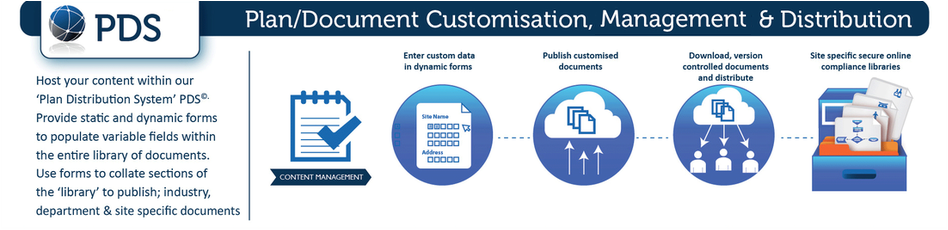
A sophisticated merge field functionality allows multi-site documents to be "virtually" allocated to sites which can then customise the merge fields with site specific data.

Leap frog your current risk systems to worlds best practice in integrated risk management. Read more


Current approaches to risk management

When it comes to risk management most businesses around the world have a similar management structure. There is usually a board, CEO or both that set the risk strategy and policy. There is usually a management team who are responsible for implementing risk management systems in their silo or cylinder of operations.

At Icon Global Link we call this approach the "manager" or "process centric" approach to risk management.

process centric approach

The disadvantage of this traditional approach is that each manager will develop their own style of risk management system and documentation, each of which will need their own especially trained team. The staff or operators who are required to implement all risk procedures for the activities that they do will have a different format for each system and this can be confusing.

The greatest disadvantage of the "manager centric" approach is during times of crisis when a major non compliance may send the company broke. (such as the death of numerous employees or consumers). During such a crisis the entire fate of the business rests with the manager that created the risk system.

Best Practice Approach to Risk Management:

Icon Global Links best practice integrated risk management approach is only made possible by using software. The software changes the paradigm of the "manager centric" approach by giving consistency to all risk management systems and documentation throughout the business or supply chain. This means that managers can work as a team across all risk systems. It also means that the risk management teams can use their skills across risk systems. The approach means that operators view a consistent format for all procedures across risk systems.

The greatest advantage of this best practice approach is realised during times of crisis when a major non compliance may send the company broke. (such as the death of numerous employees or consumers). During such a crisis the entire management team can focus on preventing the closure of the business.

best practice integrated risk management diagram

The Core of Integrated Risk Management

One key and ongoing business challenge is to manage risks in a way that prevents potential risks turning into real and costly problems.

Managers often consider the hazard analysis and critical control point (HACCP) approach as a tool exclusive to food safety however, if you ask anyone in a risk assessment tean in occupational health and safety, environment or general risk management they will tell you that they follow the same process. Integrated risk management is based on the HACCP approach which is simply a set of methods for systematically identifying, monitoring and managing risks. The purpose of this activity is to:


  • Design production and business processes that avoid or minimise risks;


  • Enable timely responses to day-to-day qualty and risk problems; and,


  • Allow pro-active and evidence-based identification of opportunities for process improvement.


In a nutshell, HACCP is about minimising risks and responding to small problems before they become big and costly problems. For example, it makes good business sense to identify and respond to a problem in a batch of raw material before it enters a manufacturing plant. If this opportunity is missed, then all of the costs and investments in manufacturing associated with using that batch are wasted.

Even worse, if a problem remains unnoticed, then a business faces costs for returns, customer disatisfaction, and perhaps even product liability that may in an extreme case cause death. In essence, early problem identification allows early intervention, and this makes good business sense because it reduces costs and improves stakeholder satisfaction.

What are the advantages?

The purpose of HACCP as outlined above translates into a number of advantages. These are briefly outlined in the table below.


Advantage

How

Improve quality, reduce risks and costs.


  • Continuous analytical tracking of performance. Allows problems to be identified and addressed early.


  • Customers and end-consumers experience improvement in quality. The number of returns and negative customer outcomes is decreased.


Supports effective business decision making and reporting.


  • Continuous analytical tracking of performance means that the outcomes of efforts and investments in improvement can be reviewed on the basis of evidence.


  • The need for investments in training & machinery can be considered and targetted in the light of solid performance data.


Demonstrates a responsible approach to risk and qualty management, and to continuous improvement.


  • Provides for traceability of produce through manufacturing processes, allowing evidence-based reviews of performance or problems.


  • It is possible to provide evidence to executives, export-markets, insurers, audits, & others of a widely known, accepted & responsible approach to risk & quality management.


What is the development process?

There are typically seven steps in the development of the best practice integrated risk management process:


  1. Management commitment


  2. A budget


  3. Resources, training and experience


  4. Develop the integrated risk management system


  5. Keep records of the control points


  6. Analyse the data and take corrective action where required


  7. Continuous improvement and plan review


Without adequate planning, senior management commitment or funds a manager trying to implement an integrated risk management plan based on the HACCP approach invariably becomes bogged down in paper work. Unfortunately many HACCP implementations never effectively get past step 4 and the real value of the plan is never realised by the business. In such circumstances the roles of the staff involved in the plan become one of constantly fixing problems rather than continuously improving processes.

HACCP involves seven principles:


  1. Analyze hazards. Potential hazards and measures to control those hazards are identified. For food the hazard could be biological, such as a microbe; chemical, such as a toxin; or physical, such as ground glass or metal fragments.


  2. Identify critical control points. These are points in production--from raw materials through processing and shipping to purchase by the consumer--at which the potential hazard can be controlled or eliminated. Examples in foods are cooking, cooling, packaging, and metal detection.


  3. Establish preventive measures with critical limits for each control point. I.e. if a critical limit is reached then the hazard will become reality. For a cooked food, for example, this might include setting the minimum cooking temperature and time required to ensure the elimination of any harmful microbes.


  4. Establish procedures to monitor the critical control points. Such procedures in a food business might include determining how and by whom cooking time and temperature should be monitored.


  5. Establish corrective actions to be taken when monitoring shows that a critical limit has not been met--for example, reprocessing or disposing of food if the minimum cooking temperature is not met.


  6. Establish procedures to verify that the system is working properly --for example, testing time-and-temperature recording devices to verify that a cooking unit is working properly.


  7. Establish effective record keeping to document the HACCP system. This would include records of hazards and their control methods, the monitoring of safety requirements and action taken to correct potential problems. Each of these principles must be backed by sound scientific knowledge: for example, published microbiological studies on time and temperature factors for controlling food borne pathogens.


Costs of implementing HACCP

An effective HACCP plan can take a considerable amount of training, experience administrative time and money to develop. It is also worth remembering that applying and improving HACCP within a business is an continuous process, not a one-time activity. A HACCP plan must be continuously reviewed and updated and records must be kept and reviewed for compliance. A typical cost for the development of a HACCP plan for a small to medium sized business in Australia is $AUD 30,000-100,000. The annual cost of applying and reviewing a HACCP plan will vary according to each business' activities. However the key issue is the value that a HACCP plan can deliver in terms of reduced costs and risks.

Integrated Risk Management HACCP Software

Icon Global Link provides software to reduce the costs and streamline the process of applying HACCP across all risk systems. This can save up to 70% of risk management plan development and maintenance costs. To find out more, see the Products and Services section of this website, or Contact Us for more information.